TLDR: Epoxy is the most common and least expensive option but has the shortest lifespan (3–10 years) and yellows under UV. Polyaspartic is a topcoat chemistry used over epoxy or polyurea bases, not a standalone system. Polyurea is the premium base coat option that forms a chemical bond with concrete and delivers the longest lifespan (20–40 years). The system that matters most for long-term performance is the base coat, not the topcoat — and most marketing focuses on the topcoat.
This is the question that comes up in every garage floor consultation, and it's a fair one. Walk into any conversation with a contractor and you'll hear different terms used interchangeably, used incorrectly, or used strategically to make one product sound like another. Here's a plain-English breakdown of what each chemistry actually is, how it performs, and why the distinctions matter for your decision.
Epoxy is a thermoset polymer — it starts as a two-part liquid (resin and hardener) that chemically reacts when mixed and cures into a hard, rigid surface. It's been used for industrial flooring since the 1950s and became popular for residential garage floors in the 1990s as the DIY market grew.
The defining characteristic of epoxy is its bond type: mechanical adhesion. Epoxy cures on top of the concrete, adhering through surface contact rather than chemical fusion with the slab. This bond is strong under controlled conditions but vulnerable to moisture pressure from below, thermal expansion and contraction, and UV exposure from above.
Epoxy is also brittle. It doesn't flex with the concrete as the slab moves seasonally. Cracks in the substrate become cracks in the coating. Under Pacific Northwest conditions — ground moisture, wet winters, temperature cycling — epoxy typically delivers 3 to 7 years before delamination, cracking, or yellowing becomes visually significant.
The water-based epoxy products sold at hardware stores (Rust-Oleum, Quikrete, Behr) are a diluted version of this chemistry and typically fail within 1 to 3 years. Professional two-part epoxy systems perform better and last longer, but the mechanical bond limitation is inherent to the chemistry regardless of concentration or application quality.
Common uses: entry-level residential garage floors, basement floors, commercial warehouse floors where lifespan is less critical.
Learn more: Why epoxy fails in Seattle-area garages and what the alternatives deliver.
Polyurea is a synthetic polymer in the same chemical family as polyurethane, but with significantly faster cure rates and different performance properties. In floor coating applications, polyurea is used as a base coat — applied directly to the prepared concrete surface before the decorative flake layer and topcoat.
The defining characteristic of polyurea is its bond type: chemical adhesion. Rather than curing on top of the concrete, polyurea's polymer chains link at the molecular level with the concrete surface — creating a fusion bond rather than a surface bond. The result is a base coat that becomes, in practical terms, part of the slab. The concrete would sooner fracture than the coating separate from it.
Polyurea also has inherent flexibility built into its molecular structure. As concrete expands and contracts through temperature cycles, the polyurea base coat moves with it rather than cracking. This addresses one of epoxy's most significant failure modes under Pacific Northwest conditions.
The chemistry also resists moisture transmission better than epoxy. A properly formulated polyurea base coat — particularly one enhanced with a silane adhesion promoter like Penntek's formulation — resists moisture fluctuations in the substrate and maintains its bond under the vapor transmission conditions common in Seattle-area slabs.
Typical lifespan in residential use: 20 to 40 years with proper installation. Cure time: significantly faster than epoxy, enabling one-day installation.
Important note: not all polyurea products are equal. Bulk-purchased polyurea sold through wholesale distributors is frequently diluted with fillers to reduce cost. Penntek's polyurea is formulated exclusively for Penntek-certified dealers, with no distribution through general channels. The only way to get it is through a certified installer.
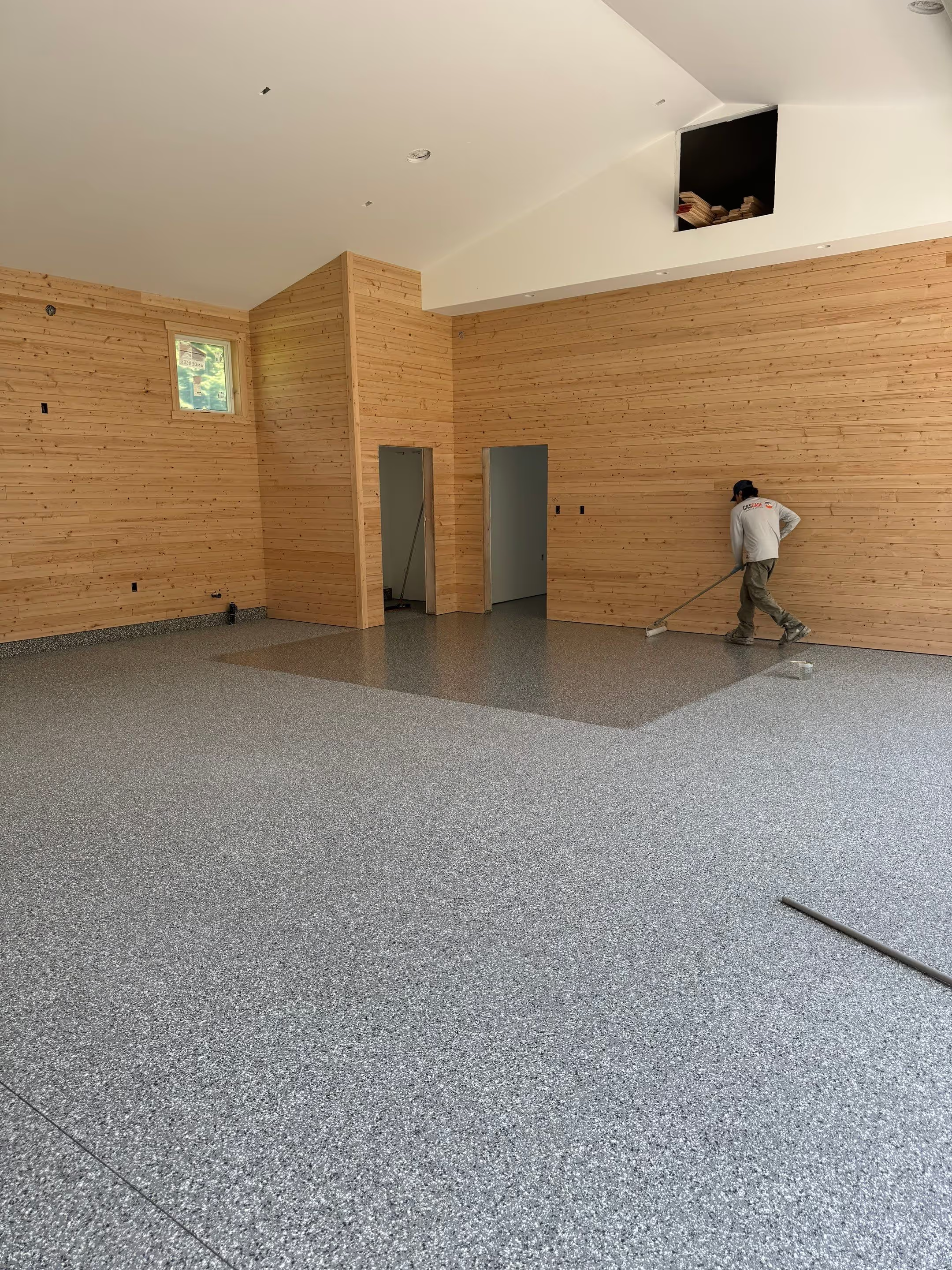
See how Cascade installs certified Penntek polyurea: our process and system overview.
Polyaspartic is a subset of polyurea chemistry — specifically, aliphatic polyurea. In floor coating applications, polyaspartic is almost always used as a topcoat rather than a base coat. It's applied over the decorative flake layer as the final clear protective layer.
Polyaspartic topcoats have two primary advantages over traditional epoxy topcoats: UV stability and surface hardness. Polyaspartic doesn't yellow under UV exposure the way epoxy does, and it produces a harder, more abrasion-resistant surface. Both of these properties make it the preferred topcoat chemistry in quality coating systems.
Where polyaspartic confusion arises: some companies market their systems as "polyaspartic" when what they mean is "polyaspartic topcoat over epoxy base coat." This sounds more premium than epoxy while leaving the mechanical bond vulnerability of the base coat in place. The topcoat's UV stability doesn't fix what's happening at the concrete-to-base-coat interface.
In a well-designed system, polyaspartic does its job well as a topcoat — it protects the flake layer, provides the glossy finish, and adds hardness. But its performance depends entirely on what's beneath it. A polyaspartic topcoat over a polyurea base coat is a different floor than a polyaspartic topcoat over a diluted epoxy base coat, even though both can be marketed as "polyaspartic systems."
See the full system breakdown: why Cascade uses Penntek polyurea base coat with polyaspartic topcoat.
Epoxy base coat:
Bond type: mechanical. Flexibility: low (brittle). UV stability: poor (yellows). Lifespan: 3–10 years residential. DIY availability: yes. Contractor availability: universal.
Polyurea base coat (certified):
Bond type: chemical (molecular fusion). Flexibility: high (moves with slab). UV stability: excellent (with FadeLock topcoat). Lifespan: 20–40 years residential. DIY availability: no. Contractor availability: certified dealers only.
Polyaspartic topcoat:
Function: protective clear coat over flake layer. UV stability: excellent. Surface hardness: high. Lifespan contribution: extends surface appearance, not a base coat. Used over: either epoxy or polyurea base coat.
The floor that delivers the best long-term outcome is a polyurea base coat (certified, not bulk-purchased) plus a polyaspartic topcoat with UV protection. That's what Penntek's system provides, and what Cascade Concrete Coatings installs throughout the Woodinville, Kirkland, Bellevue, Redmond, and Seattle areas.
Brand matters within the polyurea category in ways it doesn't in the epoxy category. Here's why.
Epoxy chemistry is relatively standardized and widely available. The difference between installers is largely in concentration, preparation quality, and application skill. With branded polyurea — Penntek, ArmorThane, and a handful of others — the formulation is proprietary and not available outside the certified dealer network. The manufacturer controls quality not just at the product level but at the installer level through vetting and training requirements.
Penntek's certification program requires dealers to complete training at Penntek headquarters, led by technical staff who hold the AMPP Coatings Inspector Certification. Before an installer is even invited to training, they're vetted by Penntek's team. This means the product's performance claims are tied to a defined installation standard — not just the chemistry in a bucket.
You can read about the Penntek certification process in detail, or read the Penntek technical overview to understand the silane adhesion promoter, FadeLock UV technology, and flexibility additive that distinguish Penntek's formulation from generic polyurea products.
This article was written to help Seattle and Woodinville homeowners make an informed decision about one of the more confusing categories in home improvement. We're Cascade Concrete Coatings — we install certified Penntek polyurea in Woodinville and throughout the greater Seattle area. If you're researching coating options and want a direct comparison for your specific floor, a free in-home consultation takes about 30 minutes and includes moisture and hardness testing with no obligation to commit.
They serve different functions. Polyaspartic is a topcoat chemistry. Polyurea is a base coat chemistry. You don't choose between them — a quality system uses both. Polyaspartic provides UV stability and surface hardness as the final protective layer. Polyurea provides the chemical bond to the concrete as the base layer.
Over a 20 to 30-year period, a certified polyurea system costs less than two rounds of professional epoxy installation — when you account for the labor, inconvenience, and material cost of redoing a failed floor. The upfront cost difference narrows considerably when evaluated on a per-year-of-service basis.
Yes, for certified systems. Penntek maintains a dealer network and Cascade Concrete Coatings is a verified certified dealer. You can ask any installer for their certification documentation and contact the manufacturer directly to confirm dealer status. Generic polyurea sold through distributors doesn't have this verification pathway — which is part of why certification matters.
Consumer familiarity. "Epoxy floor" is the most-searched term for this service category, so many companies use it as a generic term regardless of what they actually install. Clarify with any company you talk to: is your base coat epoxy or polyurea? The answer to that question tells you most of what you need to know.
Both matter, and neither compensates for the other. The best product in the world fails with poor surface preparation. Good preparation and the wrong product still produces a short-lifespan floor. The combination of certified polyurea chemistry and installation by a trained, certified crew is what produces 20 to 40-year results. One without the other doesn't get there. See what proper installation looks like in our process overview.