Most homeowners approach the process of hiring a concrete coating company the same way they approach buying anything — get three quotes, compare the prices, and pick the one that seems reasonable. The problem is that concrete coating is a category where the cheapest quote and the best outcome are almost never the same thing, and the difference doesn't show up until 18 to 36 months after installation when the coating starts to fail.
The questions below change that dynamic. They're not trick questions or gotchas. They're the questions that reveal whether a contractor actually understands what they're doing — and whether you'll be calling them back in two years to argue about their warranty.
This is the most important question on this list, and the answer should be yes. Concrete varies dramatically from one home to the next — age, composition, moisture content, previous sealers, crack history. The coating system that performs perfectly on a dry, hard, 10-year-old slab in Sammamish is not the right system for a moisture-prone, older slab in a basement in Shoreline.
An installer who quotes your job over the phone or by square footage alone is treating your concrete as a generic surface. That's how you end up with a coating that looks fine for a year and then starts delaminating because the moisture content of your slab wasn't accounted for.
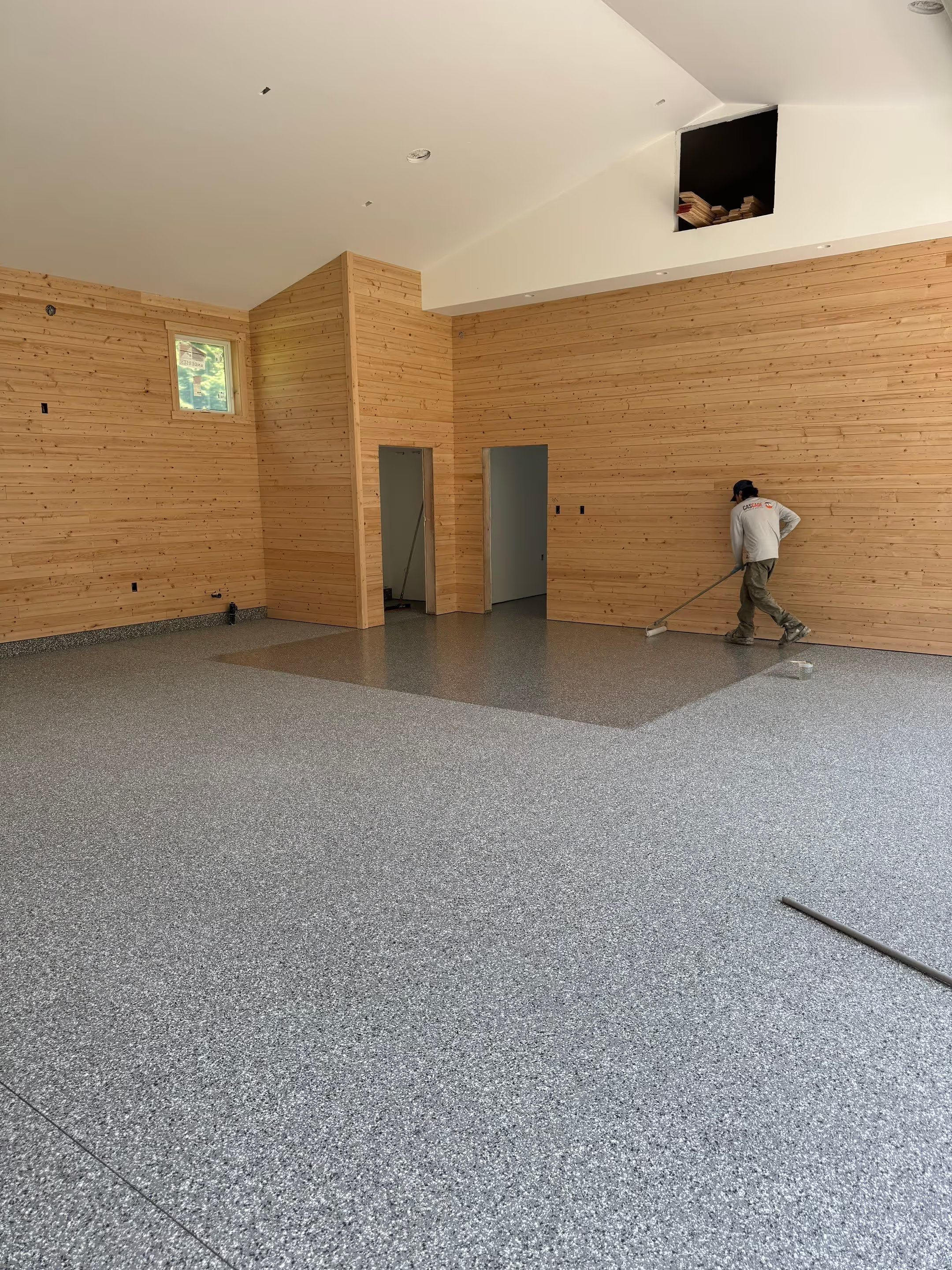
A proper in-home consultation includes a moisture test, a hardness reading, and a crack inspection — before a recommendation is made or a price is given. That's how Cascade Concrete Coatings approaches every quote. Our free in-home analysis includes all three, and the results directly determine which Penntek system we recommend. Our Issaquah project is a good example of what thorough pre-installation analysis actually resolves.
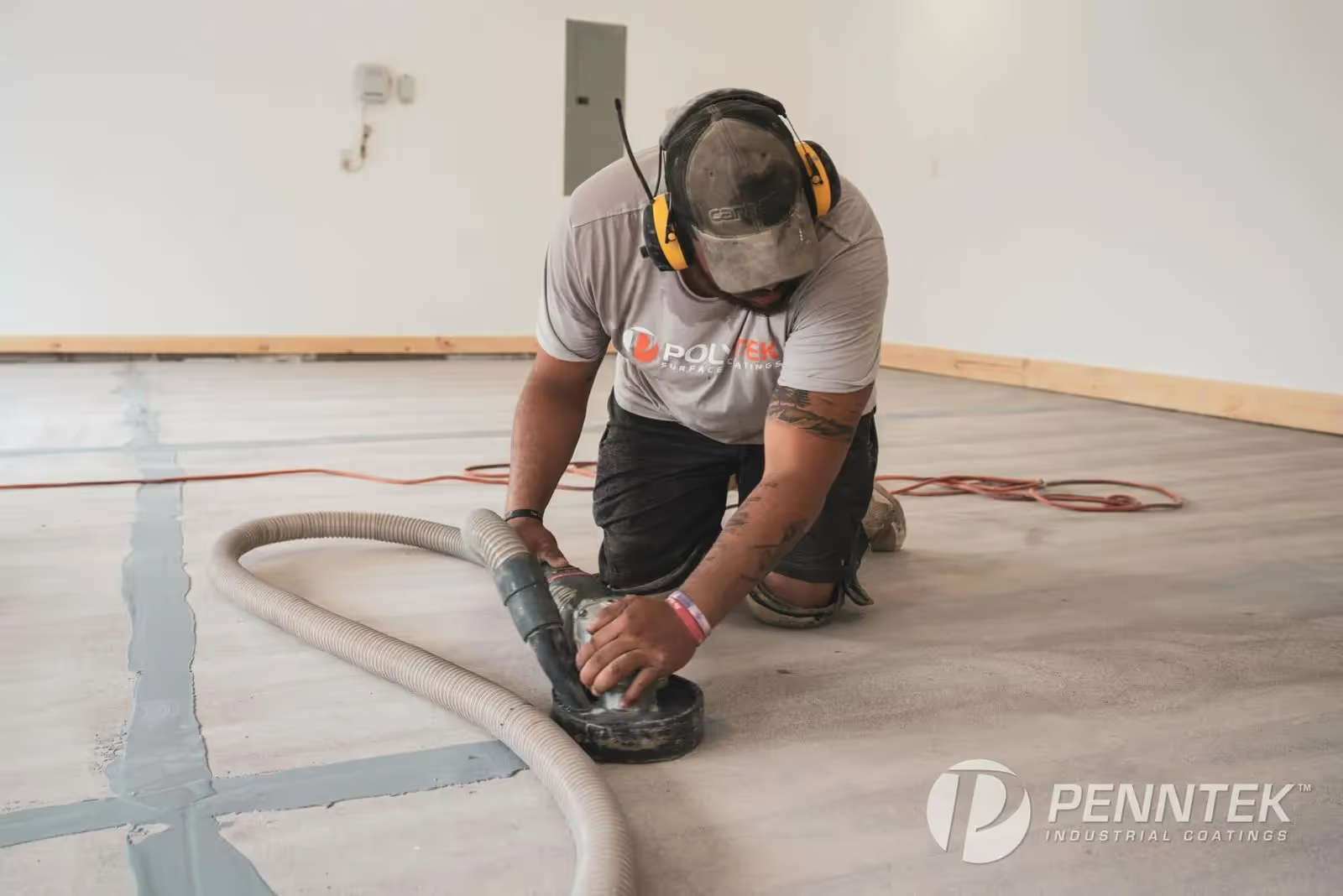
The right answer involves diamond grinding — specifically, commercial-grade diamond grinders heavy enough to properly profile the concrete surface. The equipment that does this well weighs 400 to 600 pounds and uses industrial-grade diamond tooling under real pressure. It's not a rental machine. It's not a light orbital sander with diamond pads.
If an installer can't tell you specifically what grinding equipment they use and why, that's a sign. Surface preparation is the foundation of every coating's lifespan. A poorly prepped surface produces a coating that adheres to the top of the concrete rather than bonding into it — and a coating that sits on top is always subject to surface forces like moisture pressure, hot tire pickup, and impact that will eventually overcome it.
You can also ask: after grinding, how do you clean the surface? A proper protocol includes industrial vacuuming to remove all diamond grinding residue before any coating is applied. Skipping this step is a common shortcut that compromises adhesion even when the grinding itself was done correctly.
This question is about transparency, and the answer reveals a lot. There are hundreds of coating products on the market, ranging from hardware store roll-on epoxy to certified commercial polyurea systems. Many companies use private-label products — bulk-purchased formulations rebranded under their own name, with no independent way to verify the chemistry or the concentration.
Ask the manufacturer's name. Ask if that manufacturer vets and trains the installers who use their products. Ask if you can verify the product's performance independently of the contractor's marketing materials.
Cascade Concrete Coatings installs Penntek polyurea — a third-party product manufactured in Lakeville, Minnesota and available only through certified dealers who've been vetted and trained by Penntek's technical team. You can read about the Penntek certification process and verify our status as a certified dealer independently. That transparency is part of what the certification means.
Almost every concrete coating company offers some form of lifetime warranty. The meaningful question isn't whether they offer one — it's who stands behind it.
An installer warranty is backed by the installing company. If that company changes ownership, goes out of business, or simply declines your warranty claim, your recourse is limited. A manufacturer warranty is backed by the product manufacturer. Their obligation exists independently of the installer's business.
Cascade's installations are backed by a manufacturer-supported limited lifetime warranty from Penntek directly. That's the distinction. When you ask any installer about their warranty, ask: is this backed by you, or by the manufacturer? And can I see the warranty document before I sign a contract? Any installer worth hiring can produce that document without hesitation.
Every crack in your concrete is a potential failure point. If a crack is filled with the wrong material, or not filled at all, the movement in that crack continues after installation — and that movement telegraphs through to the surface of your coating over time.
Proper crack repair uses a polyurea crack filler — a material with properties similar to the coating itself, allowing it to flex with the concrete rather than crack under movement. The repair should be done before any base coat is applied and allowed to cure fully before the next step begins. Rushing crack repair to keep installation timelines tight is another common shortcut that produces early failures.
Ask specifically: what product do you use to fill cracks, and what is its cure time before coating application? Vague answers about "our repair system" without specifics about the chemistry are worth probing.
A portfolio of fresh installations is easy to assemble — every coating looks good on day one. What you want to see is how the work holds up. A contractor with genuine confidence in their system can point you to installations in Woodinville, Kirkland, Bothell, and other nearby communities that are years old and still performing.
This question also surfaces geographic experience. A contractor who's primarily installed floors in Portland or Tacoma hasn't developed the specific expertise that comes from working consistently with Seattle-area slabs — the moisture profiles, the soil conditions, the temperature cycling patterns that define how concrete behaves in this particular market.
A contractor with a solid installation process and a manufacturer-backed warranty answers this question without hesitation. They explain the terms clearly, tell you what causes are covered and what causes are excluded, and don't treat the question as adversarial. If the answer is vague or defensive — "we stand behind our work," full stop — that's worth noting.
The best situation is one where you never need to find out what happens. That starts with hiring someone who tests your concrete, uses proper equipment, installs a proven system, and backs it with a warranty that comes from the manufacturer.
We serve Woodinville, Kirkland, Bothell, Redmond, Bellevue, Sammamish, Edmonds, Everett, and the broader Seattle area. A free in-home consultation gives you concrete answers — no pun intended — to all of these questions in person, for your specific floor. Contact us and we'll schedule it at your convenience.